

Running a business, you develop a pretty good sense of whether or not it feels busy, quiet or somewhere in between. Far fewer business owners can open a report and confidently answer: How many qualified leads did our website generate last month? Where did they come from? Which pages helped produce them? What did each lead cost? And did that activity turn into profitable work?
The distinction matters, and can tell you a lot about how your target audience is finding you, or not. Without reliable tracking, online marketing can look active – rankings are moving, traffic is rising, and adverts are receiving clicks – while the business itself remains unsure what it is actually paying for.
At SEO Paradise, we believe this information belongs to the business. It should not be hidden inside a jargon-filled agency report or reduced to a handful of impressive-looking metrics. It should be accessible, understandable and useful enough to guide the next commercial decision.
Traffic is useful. Qualified leads pay the bills.
Website traffic, impressions, rankings and engagement all have value, but they are not the end result for most service-based businesses. A specialist company does not simply need more visitors; it needs the right people, in the right locations, looking for the right service and taking a meaningful next step.
A website can attract fewer overall visits while generating more worthwhile enquiries because its visibility has improved for stronger commercial searches. Equally, a campaign can produce a large number of clicks without delivering a single suitable opportunity.
The first question is therefore not just, ‘How many leads did we get?’ It is, ‘How many of those leads were genuinely relevant to the business?’
Do you know how many qualified leads came through your website?
Before measuring performance, everyone involved needs to agree on what a lead means. For a locksmith, a phone call from somebody locked out within the service area could be a strong lead. A recruitment call, supplier enquiry or request from outside the target area is still an interaction, but it is not a qualified opportunity.
From our experience, a useful lead journey should include four distinct stages:
- Interaction: someone clicks a phone number, WhatsApp button or booking link.
- Enquiry: the business actually receives a form, message, call or confirmed booking.
- Qualified lead: the person needs the right service, in the right area, with genuine intent.
- Customer: the opportunity becomes paid work and produces revenue or gross profit.

Reporting only the first stage cannot be used as accurate conversion data. For example, a phone click is useful evidence of intent, but it is not automatically a connected call. A WhatsApp click is not always a sent message. A form button click should never be treated as a lead unless the submission was successful.
Good measurement keeps these stages separate and then connects them wherever possible.
Can you calculate the return from your marketing spend?
Once qualified leads and customers are being recorded consistently, marketing becomes far easier to evaluate. At a minimum, a business should be able to calculate:
- Cost per qualified lead: total marketing investment divided by the number of qualified leads.
- Cost per acquired customer: total marketing investment divided by the number of new customers won.
- Lead-to-sale rate: the percentage of qualified leads that become customers.
- Marketing ROI: the return generated from marketing, ideally using gross profit rather than headline revenue, compared with the full marketing cost.
For example, if a business invests £1,000 and generates 20 qualified leads, its cost per qualified lead is £50. If five of those leads become customers and each produces £400 in gross profit, marketing has generated £2,000 in gross profit. After the £1,000 cost, the return is £1,000 – an ROI of 100%.
The time period matters. Paid advertising can often be judged relatively quickly, while SEO usually builds value over a longer period and may continue generating enquiries from work completed months earlier. The right calculation should reflect the sales cycle and the way each channel works, rather than forcing every strategy into the same monthly snapshot.
Is your website part of a wider sales funnel?
A website should not operate as an isolated online brochure. For most service-area businesses and professionals, it sits at the centre of several different routes to enquiry.
- An urgent local search may lead directly to a service page and a phone call.
- A research-led search may begin with an article, continue through a case study or service page and end with a consultation request.
- A paid advert may send a visitor to a dedicated landing page with one clear action.
- A referral or social media visit may lead to a branded search, reviews, an About page and then a WhatsApp message.
- A previous visitor may return through email, remarketing or a saved page before finally making contact.
These are all sales funnels built around the website, even when the website was not the first interaction. Understanding those routes helps a business create the right pages, calls to action and follow-up activity for people at different stages of their decision.
Can you see how people choose to contact you – and where they came from?
For many specialist and local businesses, a single ‘website conversions’ total is not enough. Phone calls, contact forms, WhatsApp messages, booking systems, email clicks and live chat can represent very different levels of intent and may be influenced by different pages or campaigns.
A well-configured setup should help answer:
- How many successful form submissions were received?
- How many people clicked to call, and where appropriate, how many calls connected?
- How many WhatsApp conversations or booking journeys began?
- Which landing page, traffic source and campaign preceded the action?
- Which lead types later became qualified opportunities or customers?
This does not mean collecting personal information inside analytics platforms. It means recording commercially useful actions and connecting them to an internal lead record, CRM or simple sales log where the outcome can be confirmed.
What do GA4, Google Search Console and other tools actually tell you?
No single platform tells the whole story. Google Search Console helps us understand what happens before a person reaches the website: the searches that show the business, the pages appearing in results, clicks, impressions and changes in visibility. Google Analytics 4 helps explain what happens after arrival, including landing pages, traffic sources, user journeys and important actions configured as events.
Google Tag Manager can be used to implement and manage more specific tracking for successful forms, phone clicks, WhatsApp links, bookings and other interactions. Advertising platforms provide campaign and cost data. Call-tracking systems, booking software and a CRM or lead log help connect online activity with real conversations, qualified opportunities and revenue.
The value comes from configuring these tools around the actual business, testing that the data is reliable and then interpreting it together. Installing GA4 is not the same as having useful analytics.
It is also important to be honest about attribution. Consent choices, cross-device journeys, repeat visits and offline conversations mean that no dashboard can produce a perfect record of every customer path. The goal is dependable evidence that is accurate enough to improve decisions – not false precision.
Do you know which pages and strategies are actually working?
Once tracking is in place, we can move beyond asking which pages receive traffic and start asking which pages contribute to qualified leads. That opens up far more valuable questions:
- Which service or location pages generate the most relevant enquiries?
- Which high-traffic pages fail to move visitors towards contact?
- Which search themes bring commercial intent rather than general interest?
- Which campaigns produce the lowest cost per qualified lead, not merely the cheapest click?
- Where do users abandon a form, booking journey or important next step?
This is the information that supports meaningful optimisation. A page with strong visibility but a weak conversion rate may need a clearer offer, stronger proof, better calls to action or a simpler enquiry process. A lower-traffic page that consistently produces good leads may deserve more investment, internal links, paid support or supporting content.
The tracking gaps we find more often than you might expect
One of the first things we review when supporting a new client is their existing measurement setup. Surprisingly, it is common to find businesses already investing in SEO, paid advertising or website support without being able to see a reliable record of the enquiries being generated.
Typical issues include:
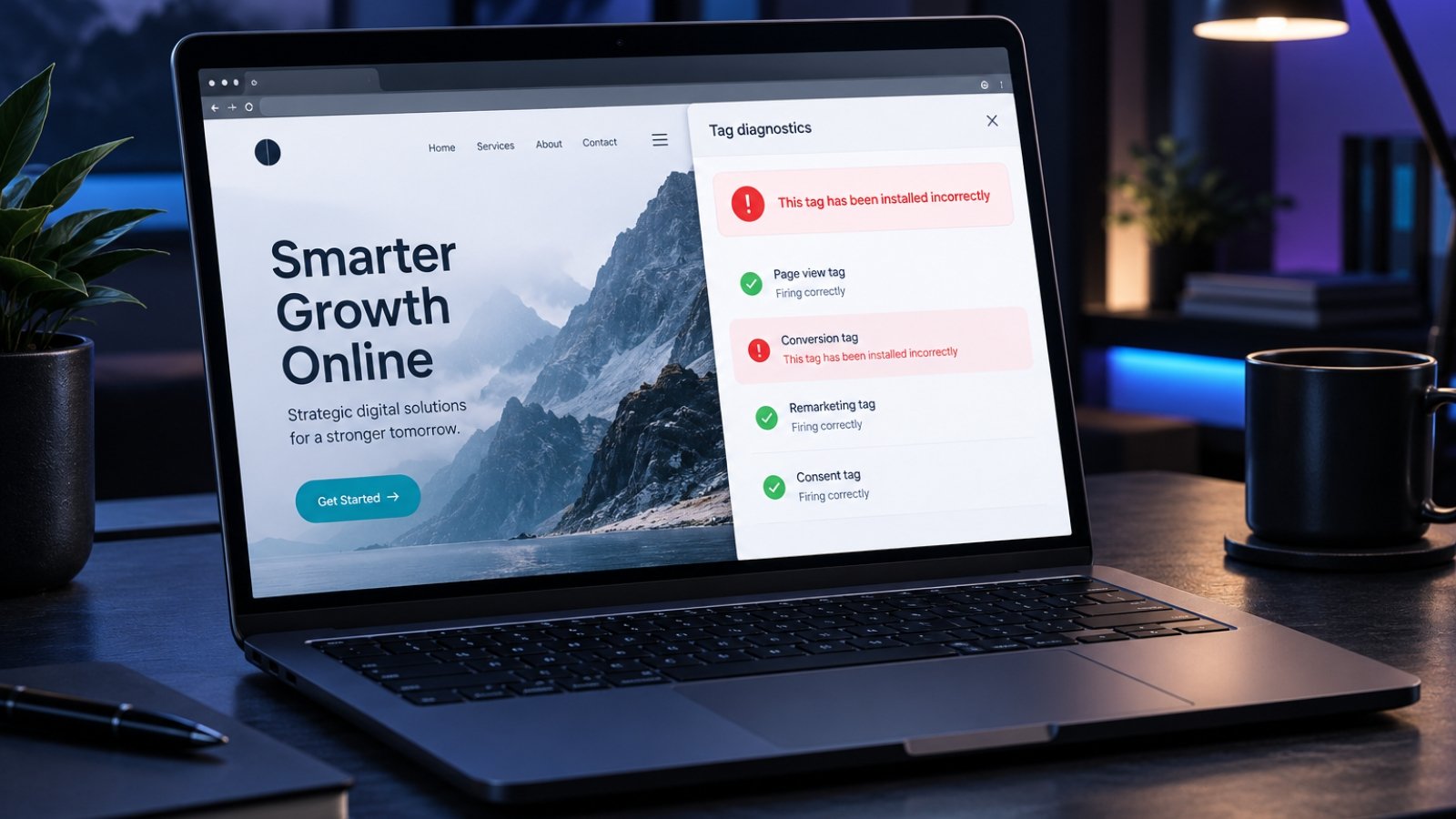
- GA4 is installed, but configured incorrectly.
- A generic form event counts attempts or button clicks instead of successful submissions.
- Forms fire twice, fail to fire at all or stop working after a website change.
- Phone, WhatsApp or booking actions are missing from reports.
- Leads are counted without the landing page, channel or campaign information needed to understand them.
- The business does not have clear ownership of, or direct access to, its analytics and advertising accounts.
- Nobody records whether enquiries were qualified or eventually became customers.
This does not automatically mean that previous marketing work had no value. Websites, forms and consent systems change, and tracking can break. However, measurement is commercially important enough that it should be a priority, checked regularly, and corrected quickly when necessary.
Why tracking is one of the first things we put in place
We are passionate about generating real results for our clients, so one of our earliest priorities is to establish a trustworthy baseline. We review account access and ownership, agree on what a genuine lead looks like, map every important contact route and audit the existing configuration.
From there, we correct or build the tracking required across GA4, Google Search Console, Google Tag Manager and other relevant tools. We test each action properly, connect the data streams that add context and create clear reporting that can be accessed anywhere, at any time.
The level of involvement is always the client’s choice. Some business owners simply want the reassurance that good enquiries are arriving and the strategy is moving in the right direction. Others want to examine pages, channels, lead types and month-on-month trends in detail. Both approaches are perfectly reasonable. What matters is that the information exists, the business can access it, and the results can be explained in plain English.
How to choose a marketing agency that is accountable for performance
If you are comparing digital marketing agencies, do not judge them only by the length of their service list or the volume of data in a proposal. Ask how they will connect their work to the outcomes your business actually needs.
Useful questions include:
- What will count as a conversion, an enquiry and a qualified lead?
- Will forms, calls, WhatsApp messages and bookings be reported separately?
- Can you show which pages, channels and campaigns influenced those actions?
- Will our business own and retain access to the website, analytics and advertising accounts?
- How will lead quality, sales and revenue be fed back into the marketing data?
- What can and cannot be measured reliably?
- How will the findings change what you do next?
A good agency should be comfortable answering these questions clearly. It should also be willing to explain limitations, investigate discrepancies and change direction when the evidence supports it. Transparency is not simply sending a monthly report; it is helping the client understand what the data means and why the next action makes sense.
Better data gives you the confidence to re-strategise and invest
Reliable performance data changes the conversation. Instead of saying, ‘SEO feels slow,’ you can see whether search visibility is growing for commercially useful terms and which landing pages are contributing to enquiries. Instead of saying, ‘The ads generated clicks,’ you can compare spend against qualified leads and new customers.
That gives a business the confidence to protect what works, improve weak conversion points, reduce wasted spend, invest in profitable services or locations and test new sales funnels with a clear benchmark.
Data does not replace experience, judgement or a strong strategy. It only reinforces how those decisions are made.
Your marketing data should work for your business
Your website should do more than look professional. It should help attract the right audience, create genuine opportunities and show enough evidence for you to understand how that growth is happening.
SEO Paradise may not be the biggest agency, but we care enormously about the success of every client we support. We combine SEO, marketing analytics, website improvement and practical business-development thinking to help specialist businesses generate measurable, qualified opportunities – not simply more clicks.
If you are investing in online marketing but cannot confidently answer the questions in this article, clearer tracking is a sensible place to begin. We would be happy to review your current setup, identify any gaps and explain where your marketing can become more measurable and effective.
Talk to SEO Paradise about lead generation, tracking and online performance for your business. We’d love to chat.
Frequently asked questions
How do I track leads from my website?
Identify every meaningful enquiry route, such as successful forms, connected calls, WhatsApp messages and confirmed bookings. Configure the relevant website events, test them and connect those records to a CRM or lead log so you can confirm which enquiries became qualified leads and customers.
Can GA4 tell me which leads are qualified?
GA4 can show the source, landing page and on-site action associated with a lead event, but it will not automatically know whether the person was suitable or became a customer. That judgement normally needs to be recorded in a CRM, booking system or internal lead log and fed back into reporting.
How do I calculate cost per lead?
Divide the full marketing cost for a defined period by the number of qualified leads generated in that period. Be consistent about which costs and leads are included, and remember that longer-term channels such as SEO may need to be assessed over a quarter or longer.
What should a marketing agency report each month?
Reporting should connect the work completed with commercially useful outcomes: qualified leads, lead methods, important pages, source or campaign, cost per lead, sales where available, and the next recommended actions. Rankings, clicks and traffic provide context, but should not be presented as the result on their own.