
A drop in website traffic can be difficult to interpret. One week your website appears to be gaining visibility and generating enquiries; the next, impressions, clicks or organic sessions begin moving in the wrong direction.
The natural reaction is often to start changing pages immediately. In our experience at SEO Paradise, that is rarely the best place to begin.
Website traffic can fall for several reasons, including changes in customer demand, stronger competition, technical faults, tracking problems and Google algorithm adjustments. The recent search volatility around 11 July 2026 provides a useful example.
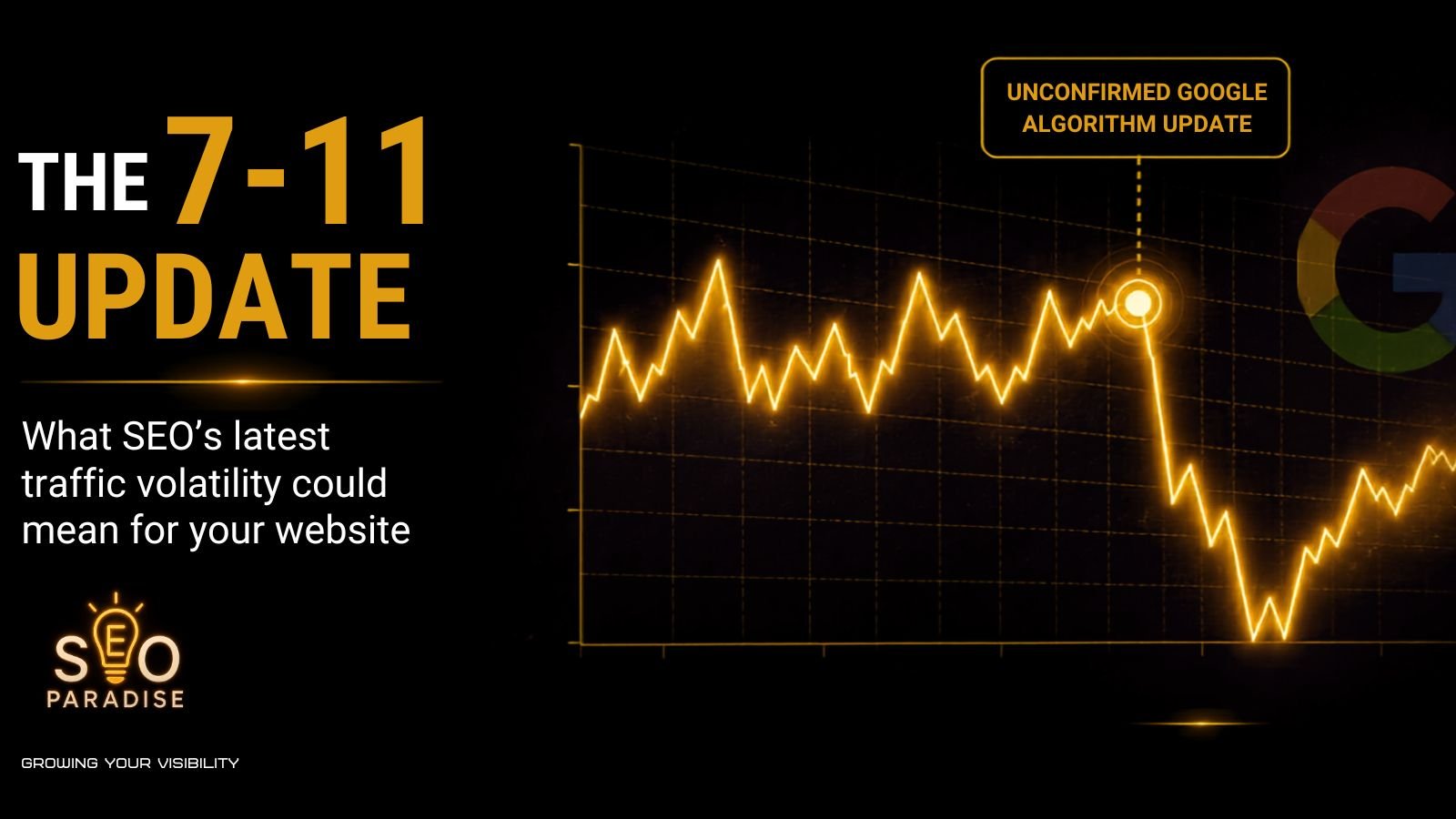
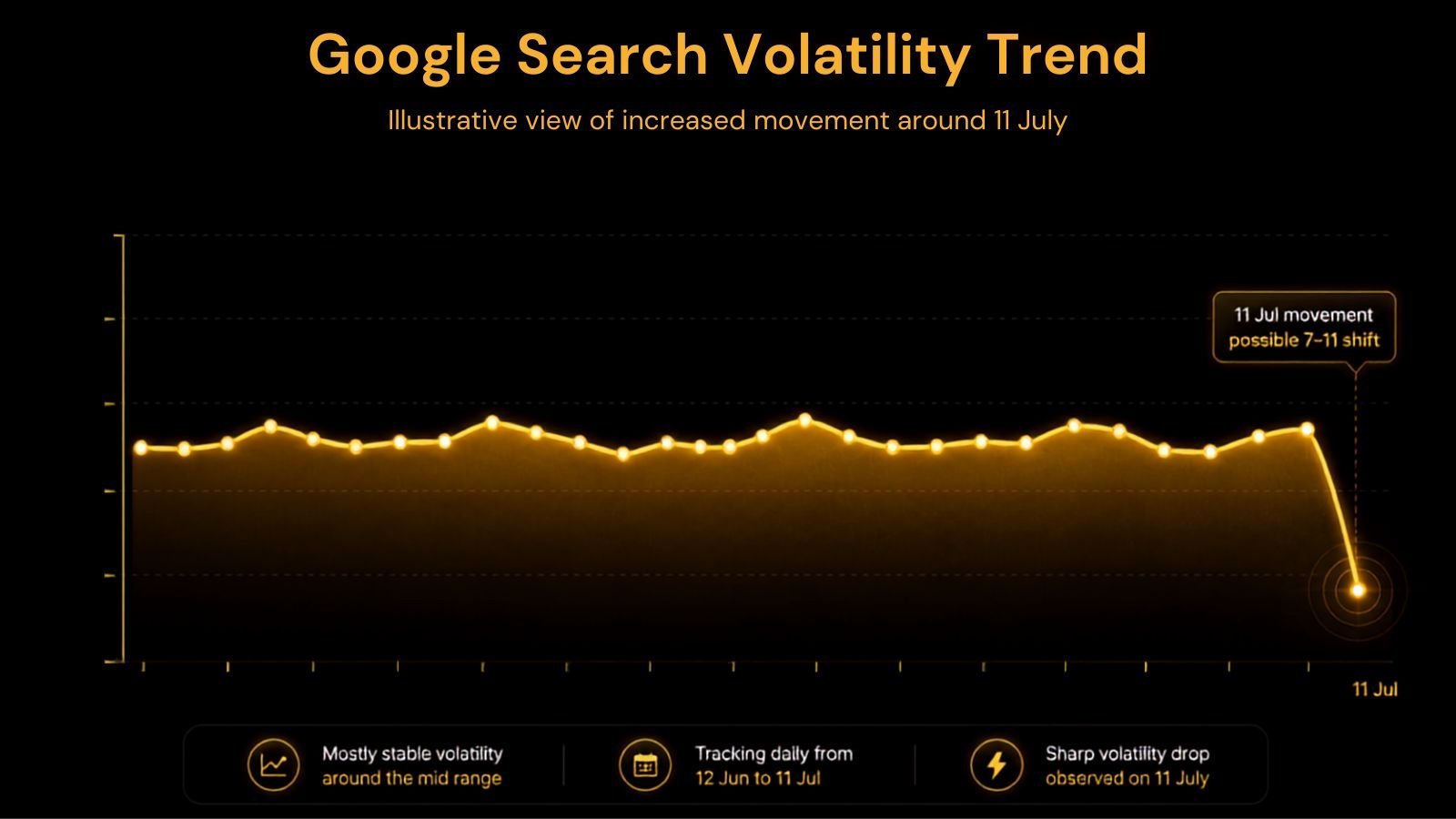
Several independent ranking trackers recorded movement around this date, leading the SEO community to informally refer to it as the “7-11 update”. Google has not confirmed a specific update, although the activity followed the completion of its June 2026 spam update. Search Engine Roundtable’s reporting on the July 11 volatility shows how multiple third-party tools detected changes across the search results. (Search Engine Roundtable)
This does not mean every website traffic drop around that date was caused by Google. It does, however, demonstrate why performance needs to be monitored in context.
Why Has My Website Traffic Dropped?
Organic traffic rarely follows a completely steady upward line. Search results are constantly changing as new content is published, existing pages are improved, and Google reassesses which results best answer each search.
Google identifies algorithm changes, technical issues, security problems, seasonality, shifting search interests and reporting errors as common causes of organic traffic drops. Even a relatively small ranking movement can noticeably affect clicks, particularly when a page moves from one of the leading positions further down the first page, or from it entirely. This official Google for Developers guide helps to visualise some of these shifts.
Before deciding that your SEO strategy is failing, establish what has actually changed:
- Have both impressions and clicks fallen?
- Are impressions stable while fewer people click?
- Has one important service page declined, or the whole website?
- Has traffic dropped while enquiries or conversions remain stable?
- Is the change limited to a specific location, device or search term?
These distinctions matter. Fewer impressions may indicate lower search demand or reduced visibility. Stable impressions with fewer clicks could suggest weaker page titles, more attractive competing results or changes to the search results themselves.
A decline in overall traffic is also not automatically negative. A website can attract fewer visitors while generating more qualified enquiries if its visibility is improving for stronger commercial searches.
How Do I Track My Website’s Performance?
The strongest and one of the most accurate starting points is a correctly configured combination of Google Search Console and Google Analytics 4.
Search Console shows how the website performs before a visitor arrives. It provides data on search queries, impressions, clicks, average positions, countries, devices and individual pages.
Google Analytics then helps explain what users do once they reach the website, including which pages they visit and whether they complete meaningful actions. Google recommends using both platforms together to gain a fuller understanding of search visibility and on-site behaviour.
For a service business, tracking traffic alone is not enough. Phone calls, contact forms, WhatsApp enquiries, bookings and other commercially valuable actions should also be measured.
At SEO Paradise, we compare current performance against previous periods and the same period from the previous year. We then review the pages and queries responsible for the largest changes. This helps separate genuine SEO problems from seasonality, temporary volatility or inaccurate tracking.
How Can I Increase My Website’s Traffic?
Improving website traffic should begin with a diagnosis rather than simply publishing more content.
A sustainable SEO strategy usually depends on several connected areas: a technically healthy website, pages that closely match search intent, strong internal linking, clear service information, relevant local signals and authority built through trusted external references.
Content should be reviewed based on what the searcher genuinely needs. A service page should clearly explain what is offered, where it is available, why the business is credible and what the user should do next. Supporting articles can then answer related questions and guide users towards the relevant service.
Technical performance also matters. Pages need to be crawlable, indexable, mobile-friendly and sufficiently fast. Broken redirects, accidental noindex tags, poor migrations and server problems can all reduce visibility, sometimes without being immediately obvious to the business owner.
Boosting website traffic is therefore rarely about one quick adjustment. It is usually the result of steadily improving the overall quality, accessibility and authority of the website.
Should You Change Your Website After an Algorithm Update?
When an unconfirmed adjustment, such as the 7-11 update, appears to coincide with a traffic drop, avoid making major changes without evidence.
Google advises against radical alterations where a page is already performing well because smaller ranking fluctuations can reverse naturally. It also recommends examining performance over several weeks when assessing whether changes have had a positive effect.
Unless there is an obvious technical problem, it is often sensible to monitor the affected pages and queries for a short period. If visibility recovers, the movement may have been temporary. If the decline continues, a more detailed review can establish whether the cause relates to content quality, search intent, technical SEO, competitors or website authority.
Building a Stronger SEO Foundation
Effective SEO is not about reacting to every daily fluctuation. It is about developing enough reliable data to recognise when something genuinely needs attention.
A strong SEO foundation allows a business to understand where its traffic comes from, which pages support enquiries and where further growth is available. It also makes algorithm volatility easier to manage because decisions can be based on evidence rather than guesswork.
At SEO Paradise, we help businesses configure accurate performance tracking, investigate website traffic drops and identify practical opportunities to improve search visibility. Where tracking is missing or unreliable, the first step is often getting the data set up properly. From there, the business can plan and invest with a much clearer understanding of what is actually driving results.